Update – 19 February 2026
The WFD engaged directly with UN authorities, issued a formal statement, and mobilised our global network. We are pleased to inform you that accessibility for the upcoming country reviews has now been restored. International Sign interpretation, captioning, and Braille will be provided, allowing deaf people and other persons with disabilities to follow and participate in the review of government reports.
However, our work is not finished, yet. We must also ensure that adequate reasonable accommodation to the deaf member of the Committee, Mr Hiroshi Tamon, including at least two sign language interpreters for meetings and informal briefings.
The WFD will continue reminding that accessibility is not optional, it is a legal obligation. We will remain vigilant. We will continue working and engaging with the UN, our members and partners to protect and strengthen accessibility in international human rights processes.
Update – 11 February 2026
The WFD expresses its deep concern over recent developments within the United Nations (UN) that continue to deny accessibility at Sessions of the Committee on the Rights of Persons with Disabilities, including the reduction of sign language interpretation.
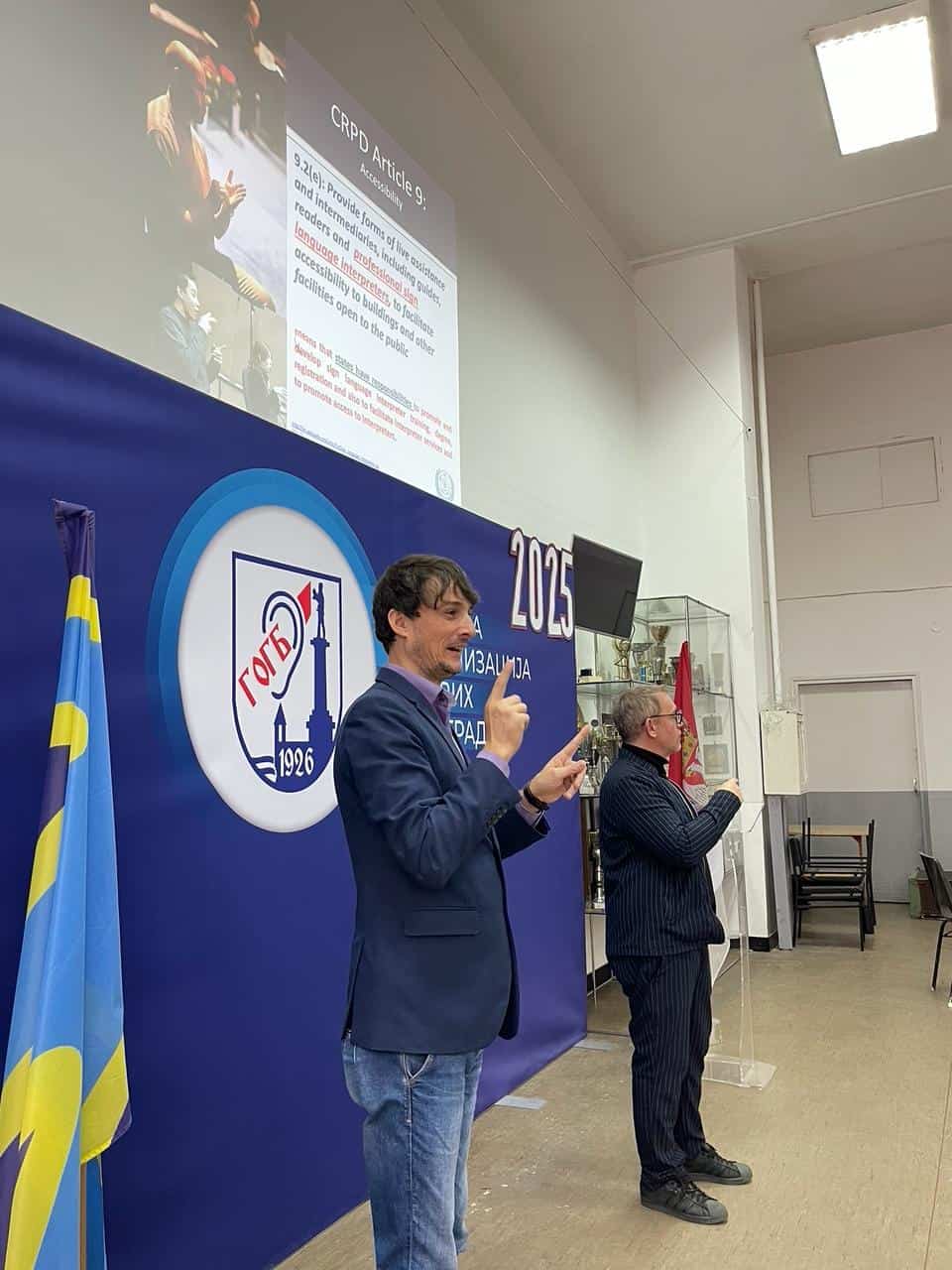
The Committee Member Hiroshi Tamon, a deaf person, does not receive full provision of sign language interpreting services from the UN. These failures undermine equal participation and contradict the UN’s obligations under the Convention on the Rights of Persons with Disabilities. These concerns have been shared publicly by the CRPD Committee, and we are aligned with the CRPD Committee here.
This has been a recurrent issue. The WFD has already condemned serious accessibility violations during a CRPD session last year.
Let us be clear: budget constraints can never justify discrimination. Accessibility is not optional; it is a human right, consisting of binding obligations under the Convention on the Rights of Persons with Disabilities and integral components of the UN Disability Inclusion Strategy. The UN must lead accessibility implementation of the CRPD by example.
Yet today, this recurrent situation risks setting a dangerous precedent for disability inclusion across the UN system, especially as we celebrate the 20th anniversary of the CRPD this year.
We therefore call on the UN to act urgently:
- restore sign language interpretation services,
- remove barriers to participation,
- ensure that persons with disabilities are never disproportionately affected by financial or administrative measures.
Access is not an option. It is a binding human rights obligation.